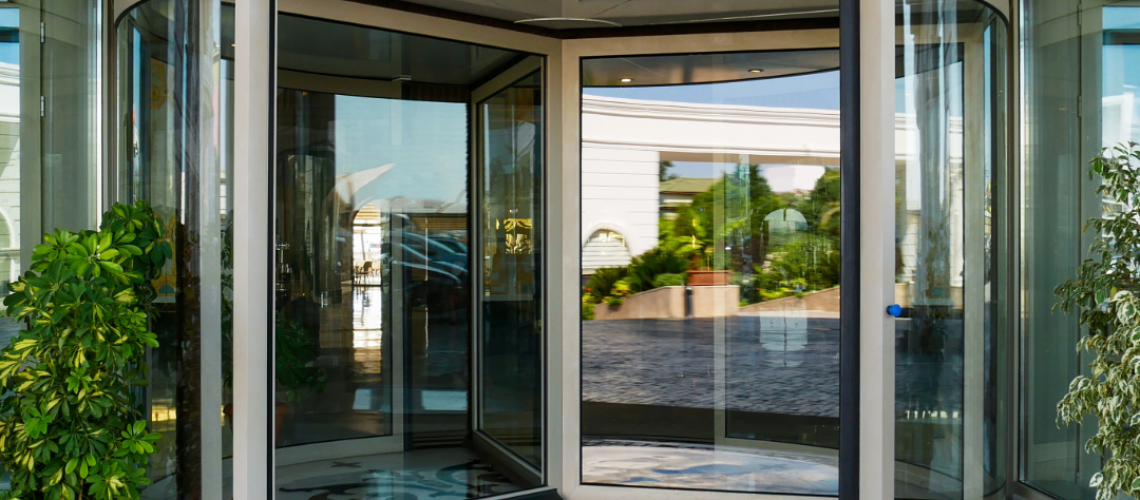
Security and efficiency are top priorities for businesses, and technological advancements are revolutionising the way we manage access control. Smart doors are more than just an entry point—they play a crucial role in enhancing security, reducing energy consumption, and improving operational flow.
Smart doors integrate cutting-edge features that make them indispensable for modern businesses. In this blog, we explore how these innovations are transforming security and efficiency across various industries, helping businesses stay ahead in an increasingly digital world.
The Evolution of Smart Doors
Traditional doors have evolved significantly, thanks to advancements in automation and artificial intelligence. Modern smart doors are equipped with technologies that provide:
- Enhanced security with biometric access and remote monitoring
- Seamless entry and exit with motion sensors and automatic controls
- Energy efficiency through climate-responsive settings
- Integration with building management systems for improved operations
By adopting these technologies, businesses can protect their assets while enhancing convenience for employees and customers.
Key Innovations in Smart Door Technology
1. Motion Sensors and Automatic Entry Systems
Motion sensors detect movement and trigger door operation, allowing for hands-free access. This feature is particularly beneficial in:
- Retail environments, ensuring smooth customer flow and accessibility
- Healthcare facilities, reducing the spread of germs with touch-free entry
- Warehouses and industrial sites, allowing quick access for employees carrying equipment
Health and Safety Executive (HSE) – Regulations on workplace safety and hygiene.
2. Remote Monitoring and Integration with Security Systems
Smart doors can be connected to a central security system, enabling businesses to:
- Monitor access in real time via mobile apps
- Receive alerts in case of security breaches
- Lock or unlock doors remotely
This is particularly useful for hotels, office buildings, and multi-site businesses, ensuring security without constant physical supervision.
3. Energy-Efficient Door Solutions
Many smart doors are designed to improve energy efficiency by:
- Automatically closing when not in use
- Adjusting based on climate conditions
- Reducing heating and cooling costs in commercial buildings
Businesses investing in low-energy automatic doors can see significant reductions in their carbon footprint and operational expenses.
Benefits of Smart Doors Across Industries
Retail
- Enhances security with restricted access to stockrooms
- Improves customer experience with seamless entry and exit
- Helps maintain temperature control in stores
Healthcare
- Supports hygiene standards with touchless entry
- Allows restricted access to sensitive areas
- Reduces energy waste in climate-controlled environments
Industrial and Commercial Properties
- Enables hands-free operation for efficiency in warehouses
- Enhances security for restricted zones
- Improves workflow and productivity
Conclusion
Smart doors are not just about convenience; they are essential for improving security, energy efficiency, and operational effectiveness. By integrating advanced access control systems, motion sensors, and remote monitoring, businesses can enhance safety and streamline daily operations.
If you’re looking to upgrade your business with cutting-edge smart door solutions, contact RDS Doors today. Our expert team can help you find the right technology to secure your premises while improving efficiency.
FAQ
What are smart doors?
Smart doors use advanced technology such as motion sensors, biometric access, and remote monitoring to enhance security and convenience in commercial and industrial spaces.
Are smart doors energy efficient?
Yes, many smart doors are designed to reduce energy waste by automatically closing when not in use and optimising climate control within buildings.
How do biometric smart doors improve security?
Biometric access control ensures that only authorised individuals can enter restricted areas, reducing the risk of unauthorised access and security breaches.
Can smart doors be integrated with existing security systems?
Yes, most smart doors can be connected to security systems, allowing remote monitoring, real-time alerts, and access control through mobile apps.
Which industries benefit the most from smart doors?
Retail, healthcare, corporate offices, warehouses, and hospitality sectors all benefit from the security and efficiency improvements offered by smart doors.